
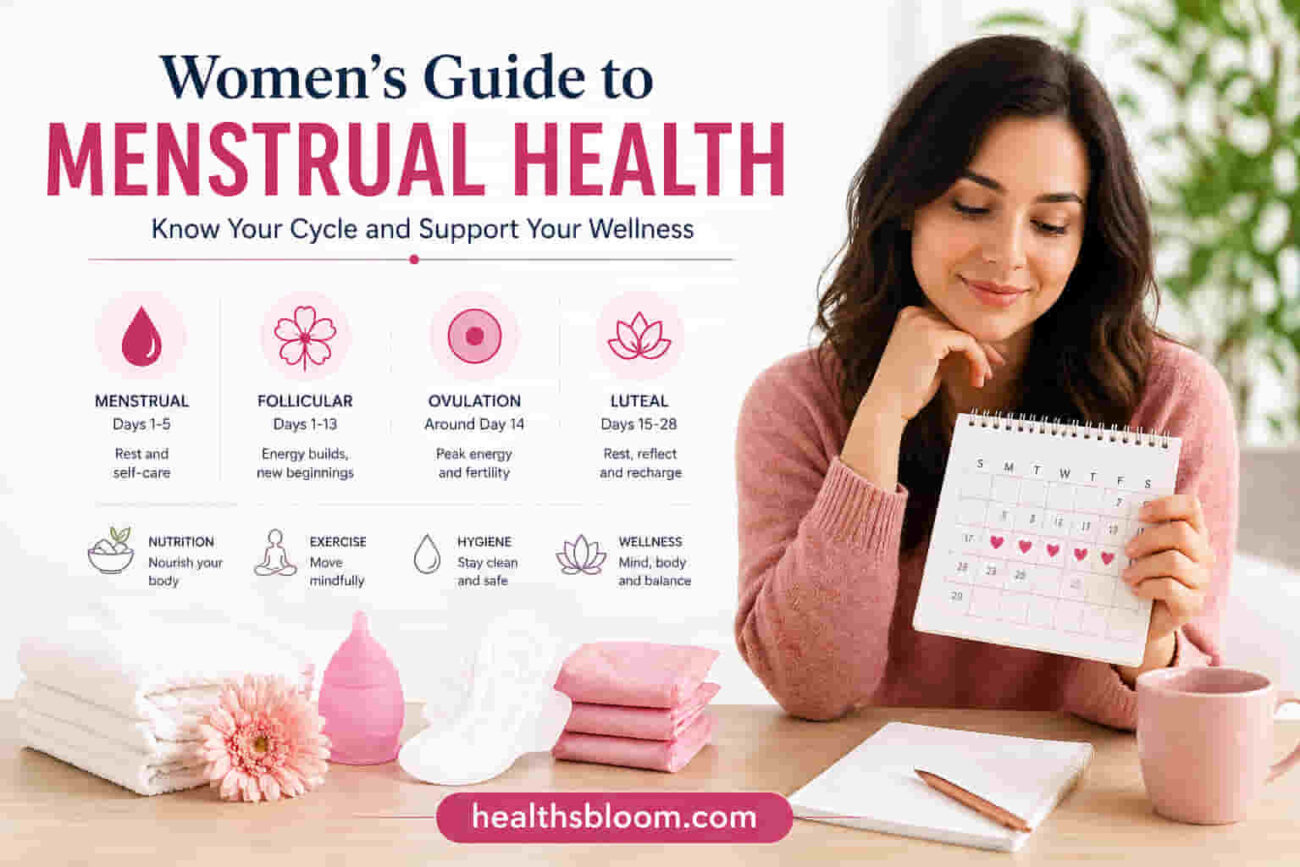
A woman’s energy, mood, and physical health are closely linked to her menstrual cycle. Knowing the weekly pattern brings calm instead of confusion. With better choices in hygiene, food, and meals at consistent times, small routine changes yield results. No shouting required. The rhythm becomes familiar. Power shows up quietly, in knowing.
In this comprehensive guide, we explore everything you need to know about menstrual health, cycle awareness, PMS management, and natural women’s wellness practices.
How the Menstrual Cycle Affects Women’s Health
Hormonal changes throughout the cycle affect energy, mood, and physical health. A woman’s body moves through a repeating pattern meant for possible pregnancy. Most cycles run from three weeks up to five. Four parts shape the flow, each shaped by different hormone highs and lows. Inside changes follow invisible signals that rise and fall week after week.
1. Menstrual Phase (Days 1–5)
Out comes the lining of the uterus, bringing blood with it. When levels of estrogen fall, followed by progesterone, a sense of tiredness creeps in for many, along with cramps and mood changes that come without warning. Rest matters now, just as much as drinking fluids and eating gentle, simple foods to bring strength back slowly.
2. Follicular Phase (Days 1–13)
Morning cramps signal the start, leading slowly into egg release. As FSH wakes up tiny sacs in the ovaries, body fuel climbs with rebuilding tissues. Energy flows more strongly here; ideas spark more easily. Creativity hums, movement feels lighter.
3. Ovulation Phase (Around Day 14)
Ovulation occurs when an egg is released from the ovary. Right after, LH surges, and estrogen hits its highest point just before. Energy lifts for plenty of women, desire grows too. Watching these signs supports family building or staying pregnancy-free without pills.
4. Luteal Phase (Days 15–28)
After an egg leaves the ovary, progesterone climbs to prepare the uterus for possible pregnancy. When conception doesn’t happen, those hormones fall, bringing on mood shifts, swelling, tiredness. Eating well helps ease such moments. So does managing daily tension. Relief shows up quietly when both body and mind get steady care.
Common Menstrual Health Concerns
Premenstrual Syndrome (PMS)
PMS affects nearly 75% of menstruating women, causing mood swings, headaches, and bloating. To manage PMS naturally:
- Consume magnesium-rich food like leafy greens and nuts.
- Avoid excessive caffeine and processed sugar.
- Engage in regular physical activity to boost endorphins.
- Maintain consistent sleep and hydration habits.
Heavy Menstrual Flow (Menorrhagia)
Heavy periods might come from hormone shifts, growths in the uterus, or problems with the thyroid gland. When blood loss lasts more than a week or means swapping pads often, it is time to see a healthcare provider. Eating greens like spinach gives iron, plus taking supplements may keep energy steady by avoiding low red blood cells.
Irregular Periods
Irregular cycles can stem from stress, weight changes, or conditions like PCOS (Polycystic Ovary Syndrome). Establishing a regular sleep pattern, reducing stress, and maintaining a healthy weight can support cycle consistency.
Maintaining Proper Menstrual Hygiene
Practicing good menstrual hygiene is vital for preventing infections and maintaining comfort.
1. Choosing the Right Menstrual Product
Women can choose from sanitary pads, tampons, menstrual cups, or reusable cloth pads, depending on flow and comfort. Always ensure products are clean and replaced every 4–6 hours to prevent bacterial growth.
2. Washing and Cleaning Practices
- Wash your hands well every time you touch period items. Do it before, and also after.
- Use mild, unscented cleansers or water for genital hygiene.
- Avoid harsh soaps or douching, as they disturb the natural pH balance.
3. Comfortable Clothing
Wearing breathable cotton underwear helps reduce moisture and prevent rashes or fungal infections. Avoid tight clothing during periods to enhance air circulation.
Nutrition and Diet for Menstrual Wellness
Diet plays a crucial role in regulating hormones and easing menstrual health discomfort. A balanced approach supports energy, mood, and reproductive health.
1. Foods That Support Hormonal Balance
- Iron-rich foods: spinach, lentils, red meat
- Omega-3 fatty acids: salmon, flaxseeds, and chia seeds, which are easily added to smoothies and oatmeal.
- Calcium and magnesium: dairy, almonds, and pumpkin seeds, which are also loaded with zinc.
- Vitamin B6: bananas, avocados, and chicken into your diet.
2. Foods to Limit or Avoid
Processed foods, excessive salt, refined sugar, and caffeine can worsen bloating and mood swings. Alcohol can also disrupt hormonal balance and exacerbate fatigue.
3. Hydration and Herbal Support
Drink at least 2–3 liters of water daily. Herbal teas, such as ginger, chamomile, or peppermint, can help reduce cramps and promote relaxation.
Exercise and Lifestyle for a Balanced Cycle
Movement and mindfulness practices improve blood flow, hormonal harmony and menstrual health.
1. Best workouts while on your period
Some light yoga, a walk, or slow stretches can ease cramps while boosting blood flow. When tiredness hits early in your period, skip intense exercise. Instead, rest takes priority then.
2. Stress Reduction and Emotional Care
Chronic stress can disrupt the menstrual cycle. Incorporating mindfulness, deep breathing, journaling, and meditation can stabilize hormone levels and improve emotional well-being.
3. Quality Sleep
Adequate sleep of 7–9 hours per night supports hormonal regulation and reduces fatigue. Establishing a consistent bedtime routine enhances overall menstrual health.
When to Seek Medical Attention
Certain symptoms indicate underlying issues that require professional evaluation:
- Periods lasting longer than seven days
- Severe cramps unrelieved by medication
- Heavy clotting or bleeding between periods
- Dizziness or fatigue due to blood loss
- Absence of periods for more than three months (not in pregnancy)
Timely consultation with a gynecologist ensures early diagnosis and treatment of potential reproductive disorders.
Read Also: Healthy Morning Routine for Energy, Focus, and Happiness: From Lazy to Lively
Breaking the Stigma Around Menstruation
Most people get periods. They’re normal, nothing to be tucked away. Yet lots of folks reach those years without ever having heard much, left wondering when things start. If school lessons used clear terms, spoke directly about bodies and shifts, things could feel different: fog clears, silence breaks, posture eases almost without noticing.
Open conversations about periods shape a world wide enough for all, where learning what bodies need feels ordinary. Slow change grows, through kitchen talks, bus rides, voices rising – making room for women’s health without whispers.
Conclusion
Each time a woman notices her menstrual health cycle, self-respect blooms in small moments. Clean routines count, yet so does choosing whole foods, alongside moving with ease each day. Ease settles deeper once rest arrives free of blame, while movement flows like breath. Strength appears quietly, shaped by decisions repeated across mornings and nights. Harmony across years begins with small acts of listening closely. The body speaks, mind and soul follow slowly.
Disclaimer: This Healthsbloom article is for informational purposes only and does not replace medical advice. Consult a doctor for personalized guidance.
Source: The Mayo Clinic-Menstrual Health
