
Introduction
Acquired Immunodeficiency Syndrome appears once HIV damages your immune system slowly. With millions affected worldwide, learning about it can slow transmission and detect problems faster. Noticing signs early, understanding how the virus spreads in your body, yet using protection puts control back in your hands – choices become sharper. This change lowers danger while supporting a better daily life.
What Is AIDS?
AIDS shows up once HIV has damaged the immune system badly, so the body can’t fight off sickness easily. Diagnosis happens either when CD4 levels drop under 200 cells/mm³ or if someone gets a disease tied to AIDS. Such conditions include serious infections that sneak in – or specific cancers like PCP and Kaposi’s. The shift isn’t sudden; it creeps along as HIV works silently over years, slowly wearing out the body’s protection.
How HIV Progresses to AIDS
A key idea tied to this is the Window Period – that’s how long it takes from possible HIV contact until a test can actually spot the infection. Even if signs show up fast, your body needs time before making enough markers for tests to catch them. Since every test works differently, usually taking several weeks, checking right after contact might need another check later to be sure.
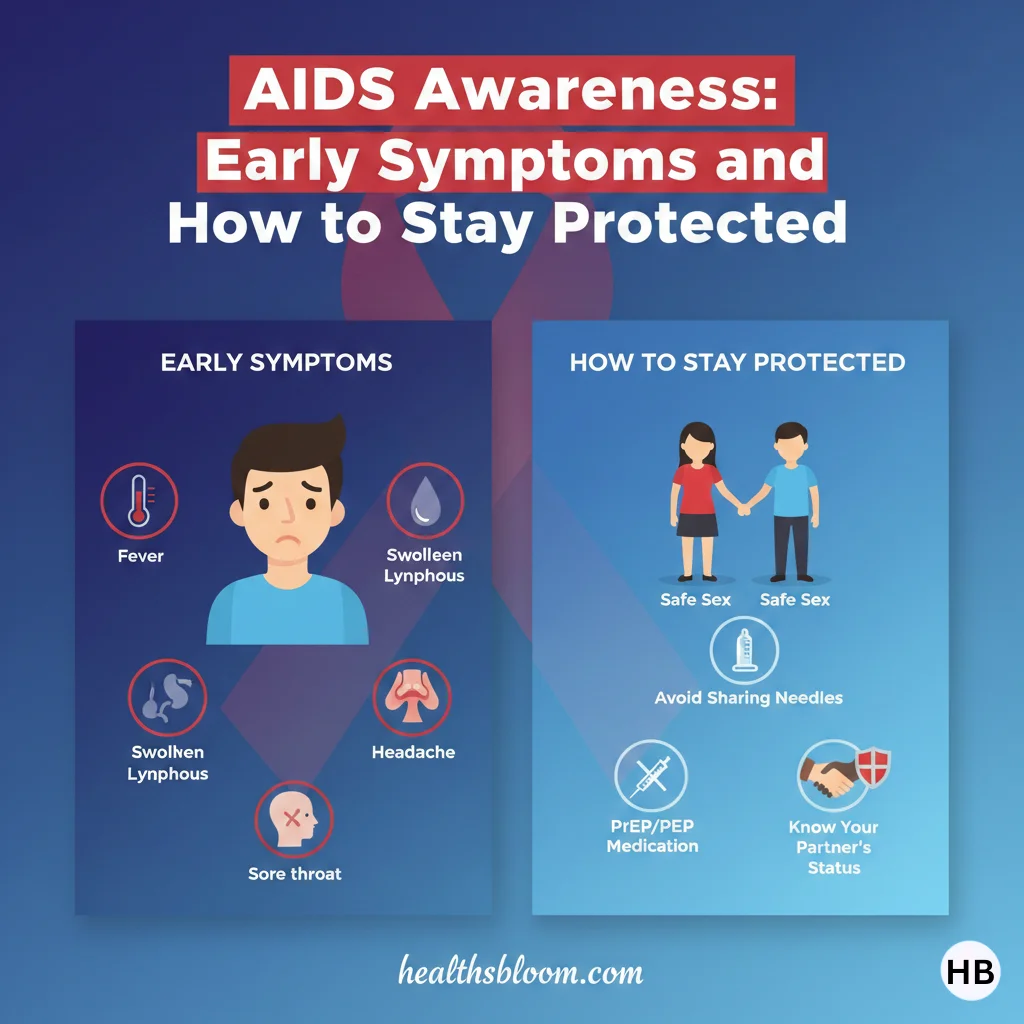
Early Symptoms of HIV Leading to AIDS
Picking up early warnings means problems are spotted quicker – giving you a chance to seek help earlier. Even though no two people are alike, certain hints often pop up right away – or appear as time goes on.
1. Flu-Like Symptoms (Acute HIV Infection)
Many people begin to see signs roughly two or three weeks post-exposure
- High fever
- Chills
- Rash
- Muscle aches
- Sore throat
- Swollen lymph nodes
- Fatigue
These symptoms often seem just like a cold, making early detection hard without a test.
2. Long-Term HIV Symptoms (Chronic Stage)
As the virus spreads, people may begin noticing:
- Unexplained weight loss
- Night sweats
- Persistent fever
- Diarrhea
- Oral thrush
- Persistent fatigue
- Sores or red spots that bother the skin
These signals appear as immune strength slips – making it harder for the body to keep up over time.
3. Symptoms Indicating AIDS
Once HIV turns into AIDS, the body’s immune system crashes – so germs that usually don’t harm start causing trouble. That happens simply ’cause the system can’t fight back anymore.
Symptoms such as OIs or ill health may indicate themselves through:
- Extreme fatigue
- Rapid weight loss
- Frequent infections
- Acute pneumonia (e.g., Pneumocystis Pneumonia or PCP)
- Chronic diarrhea
- Skin sores – such as those of Kaposi sarcoma.
- Loss of memory or cognitive issues.
How AIDS Is Diagnosed
How Doctors Find Out If Someone Has AIDS Spotting it fast gives the best chance to catch HIV early, before it becomes serious. Most checks used today work by looking for signs through methods like:
- Antibody Tests: Identify HIV antibodies using a blood or saliva sample. These tests are widely used – yet deliver quick outcomes.
- Fourth-Generation Tests (Antigen/Antibody Tests): Fourth-gen tests look for HIV antibodies along with the p24 protein from the virus – this combo helps catch infections sooner than older types that only checked for antibodies. Being able to spot both signs early makes these screenings more reliable when used at the right time after exposure
- NATs(Nucleic Acid Tests): Notice the actual virus in blood – ideal if danger’s rising or sickness begins.
Consult a healthcare provider for regular testing if you have had potential exposure.
Effective Prevention Strategies to Stay Protected
Using condoms cuts your risk – preventing infection works better than waiting to treat it. While treatments are effective, avoiding the virus from the start is the best prevention.
1. Practice Safe Sex
Putting on condoms correctly each time lowers infection risks. Whether it’s vaginal, anal, or oral sex, they act like a barrier you shouldn’t skip.
2. Regular HIV Testing
Routine testing helps with:
- Early detection
- Immediate treatment
- Halting the quiet spread of bacteria
Seek testing whenever a risk of exposure occurs or symptoms persist.
- Individuals with multiple partners
- People with previous STIs
- Pregnant women
- People who inject drugs or share needles
3. Use Preventive Medications
Nowadays, medical science gives solid options to prevent sickness early – thanks to meds that actually help
- PrEP (a pill taken before exposure to prevent HIV) keeps HIV away when you’re in danger – take it daily. Works for people facing risks now and then.
- PEP works as an emergency option when you’ve had exposure – use it quickly, within 72 hours. It starts fighting right away after potential contact, so there’s no wait time.
Every approach slashes transmission when done right – just stick to the guide.
4. Avoid Sharing Needles
Sharing needles might pass on HIV. Whether it’s ink, vaccines, or body piercings, always go for fresh gear each time.
5. Ensure Safe Blood Transfusions
Most spots test donated blood well, which means transfusions are generally safe. Still, understanding the process matters – especially in areas where health services are hard to reach.
6. Prevent Mother-to-Child Transmission
Individuals with HIV who receive consistent medical care and take antivirals can greatly reduce passing the virus to babies during pregnancy, delivery, or breastfeeding.
7. Utilize Harm Reduction Services
Drug use, and particularly injection of drugs, spreads HIV when individuals share needles. Harm reduction services are helpful to address this issue directly. Such efforts are intended to reduce the harm caused by drug use by providing:
- Needle and syringe Programs: Offering clean, one-time syringes helps stop the virus from spreading
- Education and Support: Sharing vital information and connecting individuals to HIV testing, treatment, and counseling.
By emphasizing care over blame, these programs allow them to minimize the spread of infection because the people remain safe and supported.
AIDS Myths and Facts
Showing honest details might stop wrong assumptions.
Common Myths
- HIV spreads through casual contact
- HIV can’t move via tap water or the food you eat
- HIV-positive folks can’t keep feeling well over a long stretch
Facts
- HIV doesn’t spread if you touch a person, share the air they breathe, eat off their plate, yet grab their fork
- People with HIV might stay healthy for a long time thanks to treatment that keeps things in check
Picking it up fast while staying on meds keeps AIDS at bay
The Role of Antiretroviral Therapy
Antiretroviral Therapy – often called ART is how most people manage HIV, using a mix of medicines at once to control the virus. Thanks to this treatment, your immune system holds its ground, plus it reduces the odds of giving it to someone else. If used daily without missing pills, those living with HIV can expect a similar lifespan compared to others. Following the plan closely often brings about an undetectable viral load – the count gets so low that standard tests don’t catch anything. After staying in that range, transmission through sex becomes impossible; this fact is known as U = U, meaning Undetectable means Untransmittable.
Read Also: Creatine Benefits: How This Popular Supplement Boosts Strength and Muscle Growth
Empowering Communities Through Awareness
Understanding AIDS means communities can go beyond just noticing signs – staying aware while supporting each other reduces stigma and encourages faster testing. When fear shrinks, asking for support becomes simpler, particularly if reactions are kind rather than harsh. Talking openly about HIV makes communities healthier. When people work together, infections go down while well-being goes up – plus nobody gets ignored. Real talk mixed with care? That’s what keeps folks safe and brings groups closer.
Conclusion
When people watch closely, catch symptoms early, or stick to proven methods, they can reduce how fast HIV spreads plus keep it from becoming AIDS. Spotting issues right away, testing without delay, but also forming smarter habits, a strong immune system lets individuals – and the people around them – stay healthier and informed
Disclaimer: Consult a healthcare professional for HIV/AIDS concerns. This article provides general information only and is not a substitute for professional medical advice, testing, or treatment.
Source: World Health Organization (WHO).
