

Introduction
Nowadays, life moves so quickly that a lot of people find themselves feeling tense, never quite sure why. Sometimes it’s just too much pressure piling up with no clear source. The day is dragged along with tired thoughts, and the feeling is like a wet cloth on the shoulders. The resultant burden is the inability to have a break, where the nervous system is never given a chance to rest.
Vagus nerve toning for neuro-resilience takes time before calmness is restored after the vagus nerve signals resume their rhythm. Again, balance not rapid, simply, consistent, as the quiet wisdom of the body guides. To learn more about daily habits, check out our guide on Neuro-Resilience Routines.
What Is the Vagus Nerve? (The Highway of Resilience)
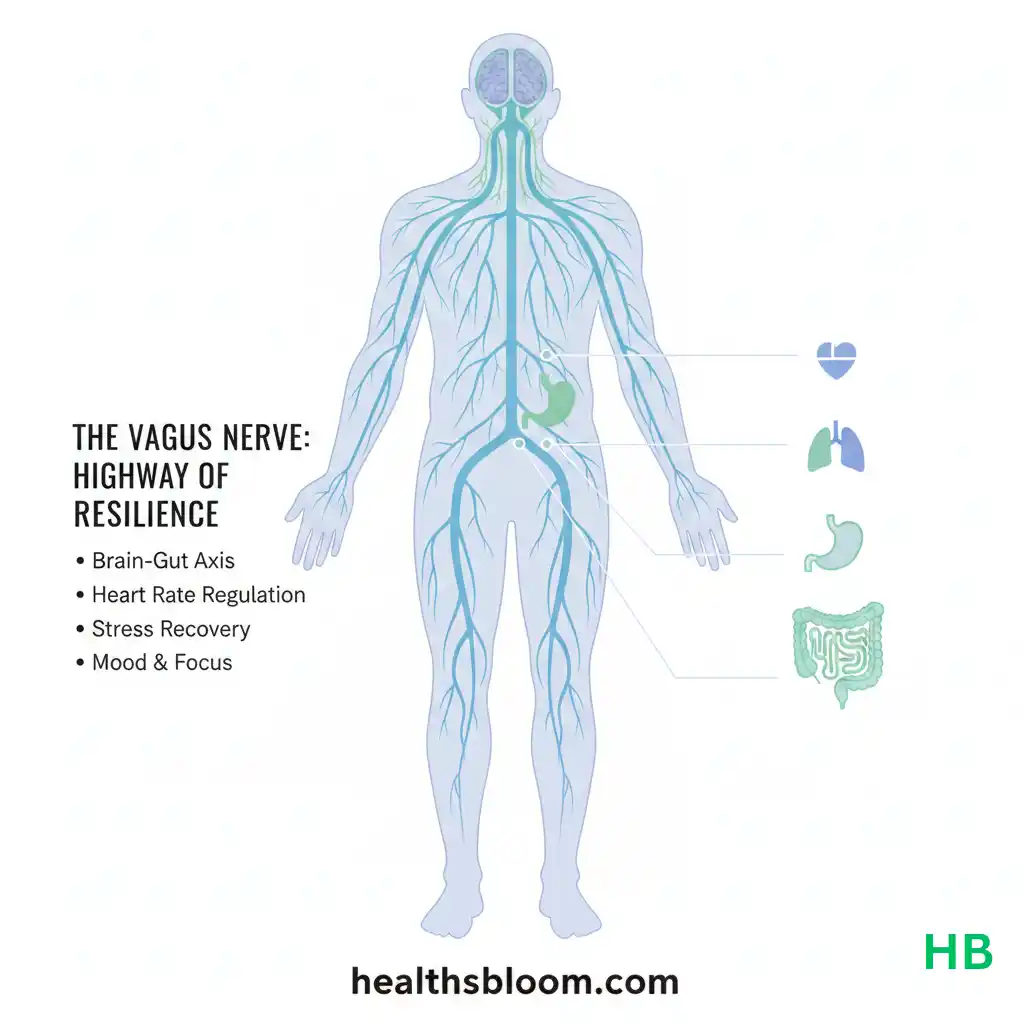
The vagus nerve stretches quietly through the body. From the base of the skull, it travels down, connecting mind to muscle in a slow sequence. One organ after another joins the line: heart first, then air pathways, then gut. Signals pass without sound, moving beneath notice. This thread ties thinking to breathing, links decisions to digestion. Its reach feels almost silent, yet never stops working. This relation enables your brain and body to be in contact all the time.
A healthy vagus nerve supports:
- Calm emotional responses
- Better digestion
- Steady breathing
- Improved focus
The effectiveness of this nerve is referred to as vagal tone. Low vagal tone can cause individuals to develop regularly experienced stress, shallow breathing, or stomach aches. When healthy, the body normalizes with less difficulty following stress.
Polyvagal Theory Simplified: Understanding Your States
The polyvagal theory refers to the reaction of the nervous system to safety and stress. It is a description of three primary states:
1. Safe and Calm State
This is the time that you feel free, concentrated, and interpersonal. This is a supported activity of the vagus nerve.
2. Fight or Flight State
This occurs in cases of stress or pressure. The body gets ready to respond, the heart beats faster, and thoughts move quickly or become apprehensive.
3. Freeze State
Fatigue creeps in once pressure pushes past the breaking point, leaving feelings locked away. A quiet settles in once pressure drags past its limit – no breaking point, just emptiness where feeling used to be.
The Window of Tolerance: When life throws things your way, staying steady happens inside what’s called the Window of Tolerance. This space lets a person handle pressure without buckling under it. Built into each person, this range isn’t fixed; movement through breath or body practices shifts its edges.
When the vagus nerve toning for neuro-resilience is touched softly, responses begin to stretch out, slower. Peace shows up more often, especially while disorder leans nearby. Feelings hold tighter – not from pushing – but from quiet changes in signal paths. Strength builds low and steady, much like roots moving under dirt without notice.
5 Simple Somatic Exercises to Tone Your Vagus Nerve Today
These are just some basic exercises of the body, which stimulate the vagus nerve toning for neuro-resilience naturally. Being simple, harmless, and efficient to practice every day, they are easy.
1. Diaphragmatic Breathing (4–7–8 Method)
The slow breathing indicates safety to the nervous system.
- Inhale for 4 seconds
- Hold for 7 seconds
- Exhale slowly for 8 seconds
Repeat 4–5 times to calm the mind.
2. Cold Water Face Splash
Splashing cool water on your face helps calm the nervous system and brings the body out of stress mode.
The method comes in handy when one is anxious or fatigued mentally.
3. Humming and Gargling
There is a nerve called the vagus, which runs close to the vocal cords. It is stimulated by humming, chanting, or gargling.
Already 2-3 minutes can make a significant difference in the state of calmness.
4. Eye Movement Exercise
Keep your head still and turn your eyes to the right and to the left far. This sends the message of safety to the brain and assists in alleviating the tension.
This technique is commonly applied during relaxation.
5. Ear Massage (Auricular Stimulation)
Massage the outer ear and the parts behind the ears. This region has a close connection with the vagus nerve, and it helps to activate relaxation.
Habit Stacking: Building Neuro-Resilient Routines
Few things beat showing up every day, even lightly. Tying vagus nerve toning for neuro-resilience exercises into normal habits works better than pushing hard now and then. Starting small keeps it steady.
Morning Routine
- Deep breathing
- Light stretching
- Eye movement exercise
Night Routine
- Humming or slow breathing
- Ear massage
- Reduced screen exposure
These habits take only a few minutes but support long-term nervous system regulation.
The Gut–Brain Connection: Diet for Neuro-Resilience
The gut and the brain are highly related as they are connected with the help of the vagus nerve toning for neuro-resilience. Helpful foods include:
- Probiotic-rich foods (curd, yogurt, fermented foods)
- Omega-3 sources (nuts, seeds, fatty fish)
- Fiber-rich fruits and vegetables
The food you consume influences your moods, vagal tone, and emotional stability.
Conclusion
Vagus nerve toning for neuro-resilience is a gentle yet powerful way to support mental clarity and brain health. Right in the middle of ordinary routines, settling the vagus nerve keeps thoughts level. A few quiet daily moves show your system how to handle stress without reacting too quickly. It is not perfection but getting them done many times that makes the difference. Peace is constant when one appears repeatedly, not when one was good in the first place.
Frequently Asked Questions
What is vagus nerve toning for neuro-resilience?
Vagus nerve toning for neuro-resilience is the practice of stimulating the body’s longest nerve to improve its “vagal tone.” A high vagal tone means your nervous system can switch from stress to a calm state faster, which is the foundation of building lasting neuro-resilience.
Disclaimer: The content on HealthsBloom.com is for informational purposes only and not a substitute for professional medical advice. Always consult your doctor before starting new exercises or health routines. We are not responsible for any actions taken based on this information.
