
Introduction
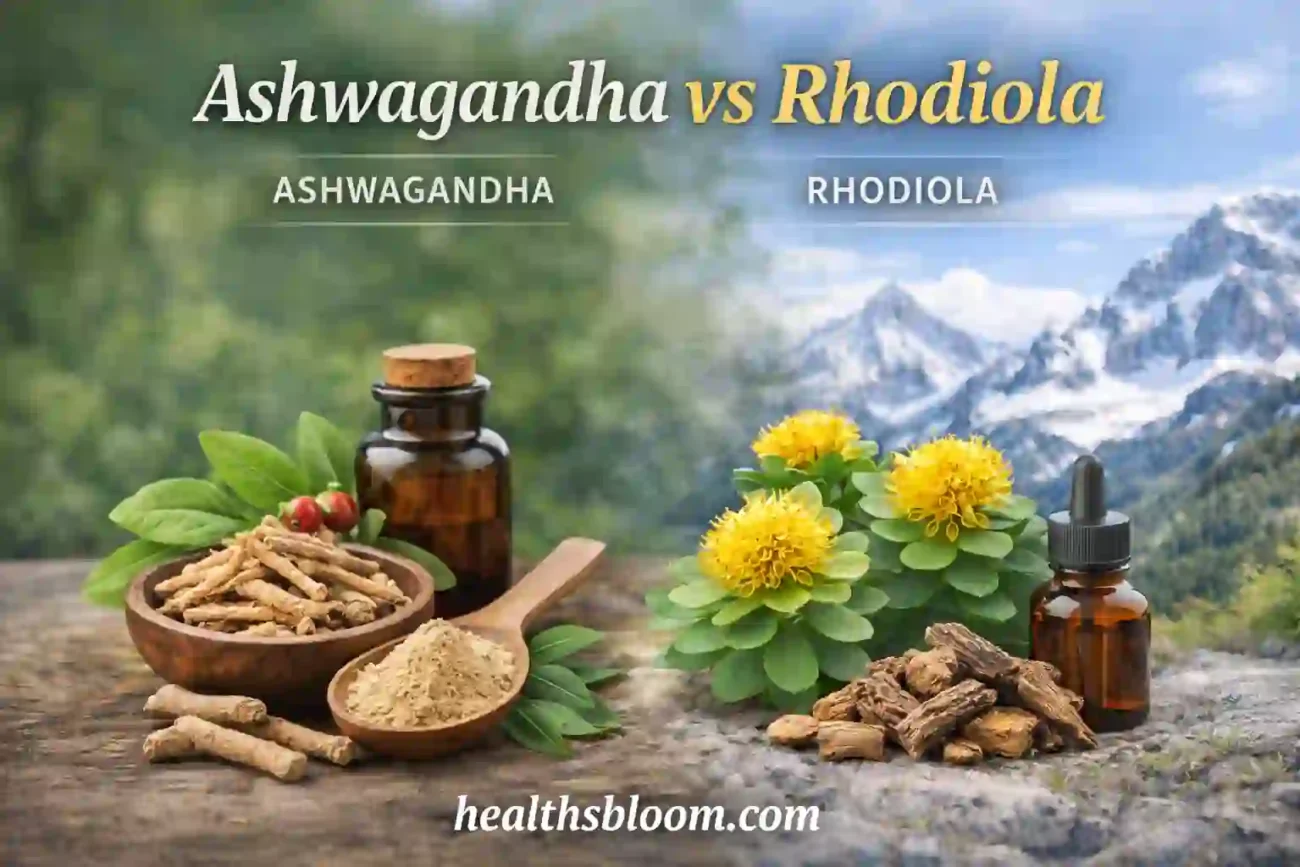
Ashwagandha vs Rhodiola is a regular competition as far as natural stress removers are involved. The two most widespread adaptogens are used to achieve balance, energy, and clarity of mind. However, which one can be better in dealing with stress, increasing energy, or enhancing focus? Here’s what you need to know.
What Are Adaptogens and How Do They Work?
From nature’s greenery come certain substances long tapped when life feels heavy. These botanical helpers may steady your inner rhythm during tense moments. Though quiet in name, they work behind the scenes where pressure shows up. Their role? Not to fix, but to soften strain’s sharper edges. Balance shifts subtly when they’re part of daily living. They help the body find balance and improve how we handle daily pressures.
Right now, few herbal helpers get studied as much as Ashwagandha and Rhodiola rosea. Even though they’re both called adaptogens, how people used them long ago, and what they do, aren’t quite the same.
What Is Ashwagandha?
Ashwagandha is an herb traditionally used in Ayurvedic wellness practices. It is commonly associated with relaxation and emotional balance.
Potential Benefits of Ashwagandha
Ashwagandha is often used to support:
- Calm mood during occasional stress
- Healthy sleep patterns
- Balanced cortisol levels
- Overall vitality
When stress builds up, lots of people turn to ashwagandha. This herb shows up most often inside capsules, though sometimes it comes as a fine powder or even a tincture you mix into water.
Who May Prefer Ashwagandha?
Ashwagandha may be a better option for individuals who:
- Experience occasional stress or nervous tension
- Want support for sleep quality
- Finding peace matters more than chasing energy. What settles the mind often helps most. Rest moves through quiet moments, not busy ones. Stillness arrives when noise fades away. Calm lives deeper where excitement doesn’t rush
Evening use comes from how rooted it feels. It settles into routines when daylight fades.
What Is Rhodiola Rosea?
From icy peaks where few plants thrive comes Rhodiola rosea, a hardy bloomer. Found across chilly highlands, it has appeared through centuries in people remedies of Europe and Asia.
Potential Benefits of Rhodiola
Rhodiola is commonly associated with:
- Supporting mental clarity
- Helping with occasional fatigue
- Promoting focus and alertness
- Supporting physical endurance
Unlike ashwagandha, rhodiola is often described as mildly energizing. For this reason, many people prefer taking it earlier in the day.
Who May Prefer Rhodiola?
Rhodiola may be a good fit for individuals who:
- Feel mentally drained during the day
- Want support for productivity
- Need help staying focused under pressure
Its more stimulating profile makes it popular among students and working professionals.
Ashwagandha vs Rhodiola for Stress
- When comparing Ashwagandha vs Rhodiola for stress, both herbs are considered supportive, but in different ways.
- Ashwagandha is often linked to calming and relaxation. It may help the body feel more grounded during stressful periods.
- Rhodiola, on the other hand, is often associated with improving resilience to mental fatigue while maintaining energy. Instead of calming, it may help you feel steady and alert.
- If stress makes you anxious or restless, ashwagandha might feel more suitable. If stress leaves you tired and unfocused, rhodiola may be worth considering.
Ashwagandha vs Rhodiola for Energy and Focus
Energy and focus are key reasons people Ashwagandha vs Rhodiola two adaptogens.
- Ashwagandha may support steady energy by promoting balance. It does not typically create a noticeable boost but may help prevent burnout over time.
- Rhodiola is often chosen for quicker support with alertness and concentration. Some people describe it as helping them stay sharp during demanding tasks.
Your personal response can vary, so starting with a lower dose and observing how you feel is a practical approach.
Can You Take Ashwagandha and Rhodiola Together?
Some blends mix herbal ingredients together inside one formula. Balancing calm effects with more energizing ones is what these aim for. Quiet moments meet gentle lift, this pairing guides their design.
Still, when comparing Ashwagandha vs Rhodiola, some people may feel that combining adaptogens is unnecessary. Trying each separately can show how it affects you. Watching reactions helps guide what works. Labels matter when picking which brand feels right. Choices shape the experience more than expected. Wise picks come from attention, not trends.
If health problems exist, or if medicines are part of your routine, talking things through with someone trained makes sense before adding anything new. A chat ahead of time helps keep choices grounded when mixing supplements into daily habits.
The Timing: When should you take them?
Think of Rhodiola like your morning coffee (without the jitters). Because it wakes up your brain, taking it late in the afternoon might make it hard to fall asleep at night. It’s best used to start your day.
Ashwagandha is the opposite. It’s perfect for the evening because it helps your body “turn off” and get ready for deep sleep.
The “Feel”: How long does it take?
Do not expect both to produce results at the same pace.
- Rhodiola is fast. Most people feel more alert and focused within an hour or two of taking it.
- Ashwagandha is a slow burner. You might not feel much on the first day, but if you take it every day for 2 to 4 weeks, you’ll start to notice a real sense of calm.
Safety and General Considerations
Even if most people handle both plants fine, their impact runs deep. At night, Ashwagandha fits best, its slight drying touch settles the body. Taken past midafternoon, Rhodiola might spark restlessness instead of ease due to its energizing nudge.
It is always best to follow the instructions on the label, beginning with a lower dose and observing your body’s response over several weeks.
Healthsbloom recommends that you always consult a medical expert before initiating any new herbal treatment, particularly when you are taking other drugs or have some other health issues that would lead to complications.
Conclusion
The choice of Ashwagandha vs Rhodiola depends on your specific needs. Ashwagandha might suit you more if quiet moments matter. When rest feels hard, many turn here first. Yet when daylight demands alertness, Rhodiola often fits your needs better. Sharp thinking during long hours? That’s where it tends to show up. Stress doesn’t hit everyone the same way, spotting your pattern changes everything. Ultimately, the choice depends on whether you need to ‘wind down’ (Ashwagandha) or ‘pick up’ (Rhodiola). Listen to your body’s signals, and you’ll find the right fit.
FAQs
Is Ashwagandha or Rhodiola better for anxiety-related stress?
Ashwagandha can be selected based on its relaxatory profile and can be more supportive in situations where the manifestation of stress presents itself as nervous tension. Rhodiola is normally chosen in cases where stress causes mental exhaustion. The most appropriate option will be determined by the impacts of stress on your body and energy levels.
Can I take Ashwagandha vs Rhodiola daily?
These adaptogens are used by a lot of people as a wellness regimen. You need to obey directions on the labels and watch how your body is reacting to it. You can always consult a healthcare professional to help you make an informed decision.
Disclaimer: Consult a medical professional before starting any herbal supplements. Healthsbloom provides this information for educational purposes, not as medical advice.
Source: Nektium Clinical Review (2024): Ashwagandha vs Rhodiola
