
Introduction
Most people have the same attitude towards calories as long as weight loss is the topic at hand. Nonetheless, the controversy on whole foods vs processed foods for weight loss proves that food quality is equally important to food quantity. It is easy to comprehend why the distinction will make wiser and more fulfilling decisions.
What Are Whole Foods?
Fresh from nature, foods like vegetables, beans, and unrefined grains count as whole when they skip factory treatment. Machines rarely touch them. Instead of coming wrapped in labels full of chemicals, they reach your table much like they appeared in the wild. Their fibers remain untouched. Nutrients stay present because nothing strips them away during production. Think of apples straight from trees or eggs from hens, no assembly line involved. When a food keeps its raw state, undisturbed by labs or factories, it fits into this group.
Examples include:
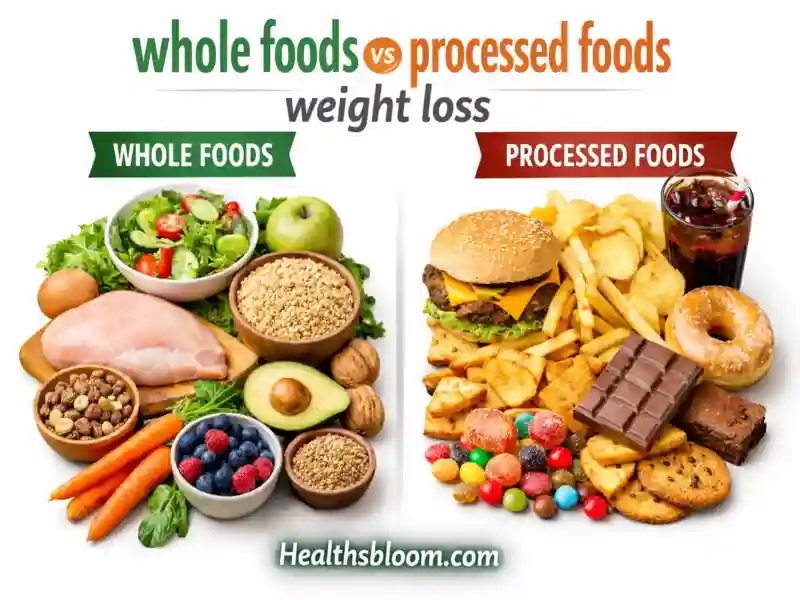
- Fresh fruits and vegetables
- Whole grains like oats and brown rice
- Beans, lentils, and nuts
- Fresh eggs, poultry, and wild-caught fish
Why it works for weight loss: Fiber, vitamins, and minerals show up naturally in whole foods. Less processing means your body spends more time breaking them down. That slower pace can leave you satisfied well past the meal.
How Choosing Whole Foods vs. Processed Foods for Weight Loss Actually Works
Fiber, along with protein in unrefined items, keeps meals filling. Fullness matters plenty when comparing natural versus packaged picks for shedding pounds.
A full stomach often follows eating one apple with peanut butter instead of drinking a sugary juice, despite equal calorie counts. Fiber inside the intact fruit slows digestion down. This slowing means energy release stretches out, staying smooth across hours.
Foods in their natural state often pack less sneaky sugar along with fewer extra ingredients, possibly keeping hunger cues clearer.
What Are Processed Foods?
Ready meals start life as raw ingredients but wind up altered. A quick freeze can preserve peas without harm, just as heating milk keeps it safe. Yet those shiny packages on shelves tend to pack in sweeteners, sodium, fats, along with lab-made tastes. Each change adds layers between you and what grew naturally.
Common examples include:
- Sugary breakfast cereals
- Packaged snacks and chips
- Fast food items
- Sweetened beverages
Foods like these usually hit the sweet spot on your tongue, so you might find yourself finishing the whole bag without meaning to.
Processed Foods and Their Impact on Losing Weight
Heavy on calories, light on staying power – processed picks deliver a quick burst compared to real food. Satisfaction fades fast when your body breaks things down too quickly, leaving room for cravings soon after.
Fewer bites might leave more room for satisfaction when food fuels the body like proper fuel. A meal built on roasted plants and charred poultry sometimes packs just as many units of energy as a small crunch-filled bag does. Fullness shows up quicker, though, especially if the stomach expands while real nutrition gets absorbed.
Freshness fades when food gets too handled, leaving behind carb-heavy bits missing their natural fuel. That rush hits quickly, a spike followed by a nosedive, draining pep without warning. Cravings creep back sooner after that dip, tugging at choices late in the day.
Why Calories Aren’t Equal
While a calorie is a measure of energy, your body’s hormonal response to that energy depends on the food’s quality. Although it is all about the balance of calories, the source of calories matters to your body with respect to weight loss.
- Hunger and Fullness: The whole foods are naturally satisfying because of fiber, water content, and protein. Dietary fiber is usually reduced in processed foods and is consumed more easily.
- Nutrient Density: Whole foods have more nutrients per calorie. This is referred to as nutrient density. When you eat foods with a lot of nutrients in them, you are supplying your body with the necessary vitamins and minerals as well as energy.
- Food Intake: Processed foods are usually ready-made and easy to consume. This practicality may promote unthinking consumption habits. Whole foods typically need to be prepared; this could encourage more mindful decisions.
The Healthsbloom Perspective: Food works better when it fuels the body right. Choosing real ingredients over packaged ones changes how you lose weight – not only cutting back but stepping up in quality. Nutrients matter more than numbers on a label. Your hunger balances itself when meals come from nature, not factories. Weight control becomes smoother, almost without effort. The goal shifts quietly – from restriction to renewal.
Finding a Balanced Approach
Choosing whole foods more often does not mean avoiding all processed items. A realistic plan focuses on balance.
Simple strategies include:
- Building meals around vegetables, lean proteins, and whole grains
- Choosing snacks like nuts or yogurt instead of packaged sweets
- Reading labels to spot added sugars
The goal is not perfection but consistency. Gradually increasing whole foods in your diet may support steady and sustainable weight management.
Practical Tips to Transition Toward Whole Foods
Should boxed dinners feel normal lately, tiny shifts might just reshape everything instead.
Swap out just one packaged snack each day for something unprocessed. Instead of soda, try sipping water or plain tea. Go for bread made from whole grains instead of the pale kind.
When you cook ahead, sudden fast-food runs tend to fade. With basic groceries around, picking better options feels natural. Simple foods at home shift how you decide what to eat.
Over time, small changes help build better routines that feel natural instead of forced.
Conclusion
Most people overlook what’s past the calorie count. Stuff you chew affects hunger signals, along with fuel quality inside cells. Whole foods instead of boxes shift stamina patterns slowly. Small tweaks, repeated, build steady results without stress. People find steady health by doing small things right each day instead of rushing to quick answers. Good outcomes sneak up when eating feeds your body well, rather than only cutting calories down.
FAQs
Whole Foods vs. Processed Foods for Weight Loss
Yes, moderation is key. A few portions of processed foods may provide a part of a balanced diet. Nevertheless, you will see the most benefit by focusing on whole foods to improve fullness and long-term habits.
Are whole foods always lower in calories than processed foods?
Not always. Some whole foods are high in calories, such as nuts and avocados. The variance is that whole foods tend to offer fiber and nutrients that aid in regulating appetite, whereas most of the processed foods can be overeaten.
Note: This Healthsbloom article is for informational purposes only and does not constitute medical advice. Always consult with a doctor or a professional before starting a new diet.
