
Introduction
Getting back into cardio might seem tough when you’ve been inactive. But there’s no need to go all out right away. Instead, ease into it pick activities you actually like while keeping things safe. Here, you’ll find simple choices, a month-long starter plan, plus tips to keep going. We will examine relaxing options of cardio workouts for beginners, how you can organize sessions that can get you stronger session by session, as well as how you can prevent injuries and remain pumped at the same time. After having read, you will know accurately what actions to do to have a healthier heart, stronger stamina, and, naturally, self-confidence.
Why is cardio important?
Cardio workouts for beginners outperform in terms of how well your heart moves blood, so your muscles get more oxygen. Staying active means your body performs better each day, also improving energy levels over time
- Slow down your heartbeat when you’re at rest.
- Gain muscle while lowering fatigue by using resistance training alongside proper rest.
- Boost concentration while calming emotions.
- Fuel your body’s engine so you can manage pounds more easily.
Getting Started: A Quick Safety Check
Cardio workouts for beginners start by thinking about these three points, and remember them as you go
- Got heart trouble, high BP, or diabetes? Check with your doctor before doing anything. One size doesn’t fit all when it comes to health stuff. Better safe than sorry.
- The target? Try to hit 150 minutes weekly of gentle movement, say, a quick walk, but take it step by step. Start low, then inch forward.
- The right gear? Use comfy shoes to guard your feet, and also drink enough water.
Principles of a beginner cardio plan
- Begin small: the more your heart pains, the more you inhale, and you can yet speak without being tight. The level will enable you to keep running and decrease the possibility of being injured.
- Action plan: Add more time/effort to a little bit every week – 10-20% or even 1-2 minutes to minimize the risk of overdoing it at the beginning.
- Begin with 5-10 minutes of mild movement to warm your body, and end with slow movements with stretches just to stretch you out and spring back even quicker.
- Mixed cardio workouts for beginners are more entertaining, alternating exercises will combat boredom, target different muscles, and reduce the chances of injury through repetition. Keep doing it day by day, rather than working yourself to the limit today, and later skipping; regular little workouts tend to keep people working longer.
Beginner-friendly cardio
- Brisk walking: Going for a quick walk turns into solid exercise because you don’t need gear, it’s gentle on joints, yet still builds endurance fast. Starting? Three or four times, fifteen or twenty minutes a week, good cardio workouts for beginners. As soon as stamina is improved, it increases to 30 or more minutes. There will be a couple of brisk strides, as it were, that is, 30 seconds of quick and a minute or two slow.
- Biking- Riding a stationary bike or a standard bike outdoors: On your knees, you do as much pushing as you please. First workout: 10-20 Minutes walking straight and steadily, strike it three times a week. Further 5-10 minutes after 1-2 weeks. The muscles will be hard, even in short bursts of the push when you are working hard.
- Elliptical trainer: The reason it is effective: It is an activity that addresses the entire body with no strain on the joints. Get going: Find some easy opposition, ride 10-15 minutes, and kick that three times a week. Gradually work down to half an hour and then relax between bouts of vigorous activity.
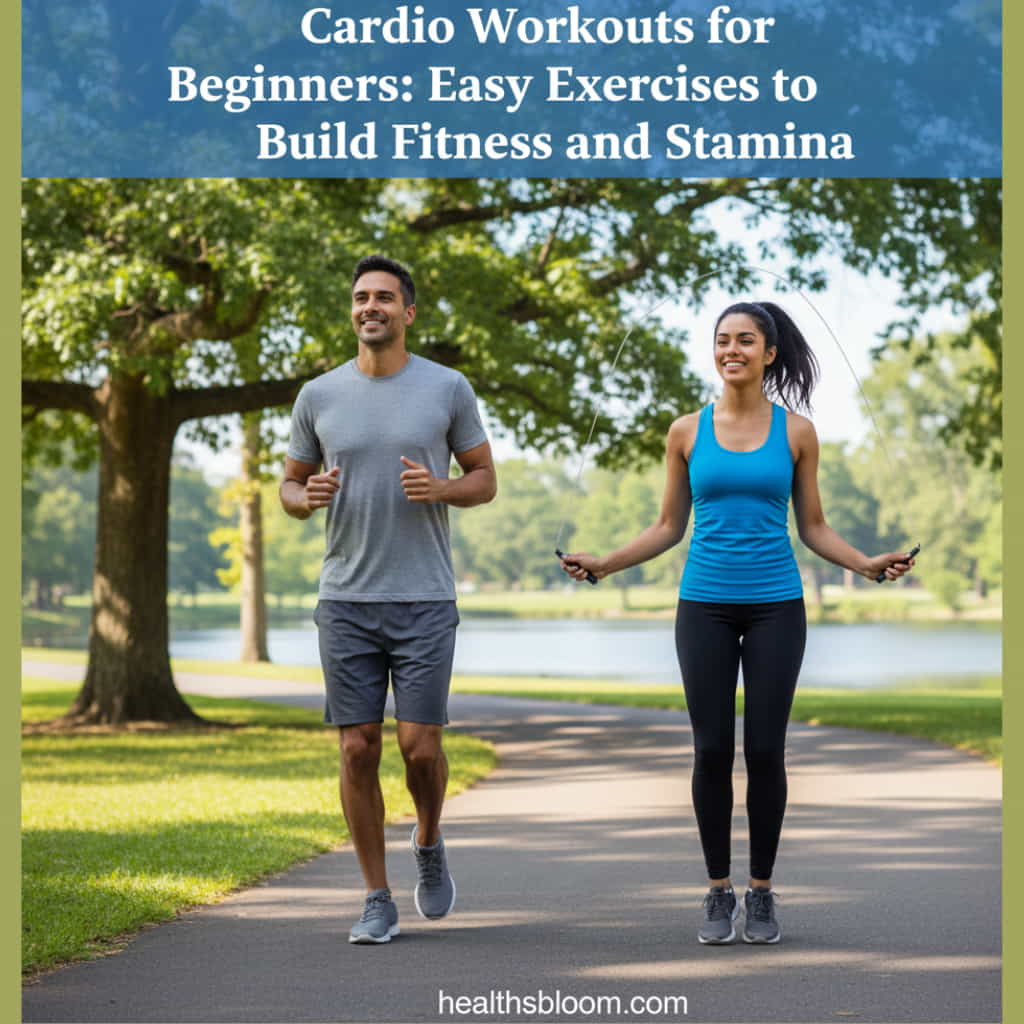
- Rope skipping is the easiest and most popular way to start with: It uses up plenty of calories, but does not need much room. Take small steps as one swings the rope in case of having a hard time jumping. You can begin with a minute or two, but you can gradually add time, and you get to know how to move in time.
- Water aerobic activities: Great since it is gentle on the joints, but provides the support of water lift and push. Start with the nonstop or burst working and cardio workouts for beginners in the pool for half an hour or twice or thrice a week.
Group exercises or exercises on music.
Why it works: It keeps you motivated as it is being done by others, and goals are more visionary. To start with, locate newbie sessions and push as hard as you feel like. Doing group cardio workouts for beginners enables you to continue doing it and still make things interesting.
Your 4-Week Beginner Plan
- Week 1: Choose one thing – like walking or cycling – for half an hour, three times each week. Keep it light so chatting feels natural while moving.
- Week 2: Ramp up your session to 25 minutes. Swap in something fresh, say, a dance clip, for 15 minutes once that week.
- Week 3: Give intervals a shot. Hustle for 60 seconds, afterward take it easy for two minutes. Loop that six times.
- Week 4: Get active for half an hour, four times this week. Mix in different things you enjoy so it stays fresh. Try one thing here, then another there, and keep it from getting stale. Jump around what feels right each day.
You can talk without gasping for air
- Moderate Level: You can talk but cannot sing, and you are also breathing deeper. This is the most suitable area for newcomers.
- High Level: You are unable to talk anymore; you gasp. This is to say that you are pressing very hard.
- Note your progress: time, distance travelled, difficulty. Keep track of the progress of your endurance, sleep, and everyday activities.
Safety considerations
- Good shoes are quite essential as far as you should have those that do not hurt your feet as you walk on flat and even surfaces.
- Cardio workouts for beginners require enough water, but do not access either hot or cold places. When working out outside, it is advisable to wear sunscreen and make sure you change your plan in accordance with the environment.
- Pain vs discomfort: A little soreness after a workout is part of the natural process of an organism, but stabbing pain, or persistent pain, is an indication to abandon the exercise and seek medical advice from a health specialist.
- Use a green light when you have high blood pressure, sugar problems, breathing problems, or heart problems. Always talk to your physician before using the green light. Next, adjust the level of pushing according to their suggestions.
It makes the lifestyle a habit, and a kick start is motivation
- Make it routine: Just treat exercise as an appointment that one has to keep. Put it in your calendar, and remind yourself with reminders.
- Team exercises, group sessions, or web groups provide social assistance; these remind you that you are on schedule since teamwork is easier to remember.
- When things get hectic, slow it down, pull it a bit when you are straining. Persisting is preferable to wallowing in misery.
- After a few weeks or so, allow a degree of variation, make sure that you are on the right track, and adjust targets or equipment, or your action. Swap stuff out if needed.
Read Also: Forearm Exercises for Men & Women: Boost Strength, Stability, and Muscle Size
Eating and resting are made easier
Eating right goes hand in hand with good sleep, yet how you plan and shape cardio workouts for beginners affects the results. A mix of carbs with protein about an hour or two before exercise works well, especially if the workout’s going to take a while. While moving, keep water close and toss in some protein now and then for muscle recovery. When you crash at night, your body adapts better, which means skipping rest isn’t smart. Time off from lifting? Just as key, it lets tissues heal plus cuts down on getting hurt.
Conclusion
The cardio workouts for beginners fact is that being new to cardio is a great way to feel confident, attend regularly, and even establish a foundation for a healthier future. You have to pick things you really enjoy doing, get used to them, and then gradually work them up so your strength and energy increase, but you are not injured. Exercise and sleep at the same time, consume food that brings you happiness, and drink as much water as you can. This is an ideal combination.
Frequently Asked Questions:
How much cardio do I need?
Start with 150 minutes of light activity a week. You can break this into 10 or 15-minute sessions if that is easier for cardio workouts for beginners.
How does it feel to work at a medium effort?
You are breathing deeper, you can talk without breath, but not sing. You are not tired, but you are thrilled. Yep, you can still get light cardio workouts for beginners even when you are not exercising. Have short periods of 10 or 15 in the start and continue adding half an hour every day.
What if I feel pain?
A little muscle soreness is normal. But if you feel stabbing or sharp pain, stop immediately and rest.
Do I need a gym?
No, it would be okay to walk or ride a bicycle. Jump rope, go swimming, maybe some tricks at home, everything comes up in your favors. All exercises are good and do not require one session.
Disclaimer: This Healthsbloom’s article is for information purposes only & not medical advice. Consult a professional before starting new cardio routines to ensure safety and stamina.
