
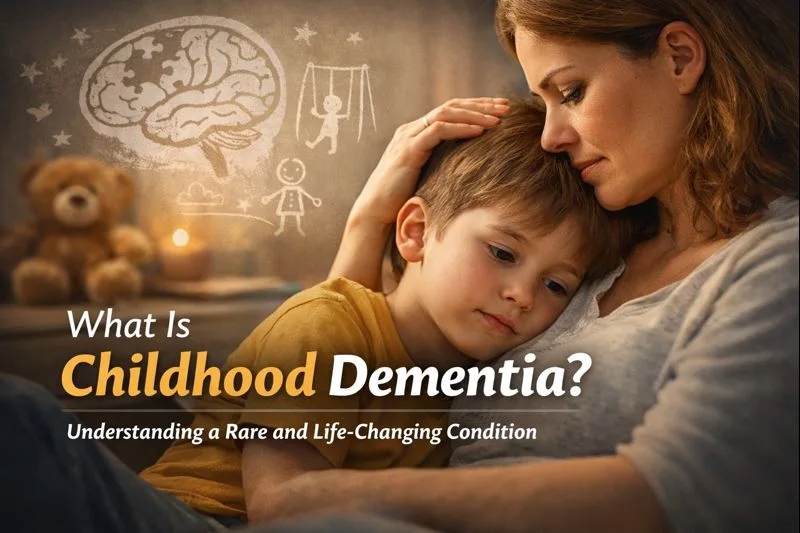
Introduction
People tend to link “dementia” with aging. Children can also experience this issue, a harsh truth few know. This form hits young lives hard, reshaping each day in heavy ways. Childhood dementia might be rare, but speaking up matters because when we see these families clearly, we start to understand the weight they carry.
A look at what it feels like day to day shapes how we see things. Awareness grows when real experiences come into view. Compassion often follows quietly. This piece does not give medical guidance, just space to think differently.
Understanding Childhood Dementia
Not every brain disorder shows up later in life; some start long before adulthood. These uncommon issues strike kids, slowly changing how their minds work. Instead of fading memories like older people might face, young ones find skills they once had begin to slip away. What begins as small delays can grow into serious challenges over time.
Little by little, some kids start forgetting things they once knew well. Problems creep into how they think, walk, talk, or handle everyday tasks. Since hardly anyone knows about childhood dementia, parents often feel lost searching, wondering, not sure what’s going on.
Early Signs Families Might See
A kid might surprise you. Over weeks or months, Shifts show up quietly, sometimes as different reactions, other times as new, unusual habits. Some parents make less eye contact. Others find playtime feels distant. Moods shift without a clear cause. Routines get tricky. A kid who used to talk without stopping may now pause, hunting for what to say. Sometimes their gaze drifts while listening, more often than before. Not every change means the same thing. Each situation unfolds in its own way:
- Difficulty keeping up with learning or school activities
- Changes in speech or communication
- Reduced coordination or balance
Mood changes might show up first. A person could pull back from friends slowly. Behavior shifts often come without warning. Social moments feel different than before. People start to notice small differences in how the child acts, and suddenly, skills that were once gained are now slipping away.
What was learned begins to fade. Childhood dementia not just about a child forgetting a name; it might be the moment a child looks at their favorite teddy bear as if they’ve never seen it before, or a five-year-old suddenly struggling to remember how a fork works. Skills that showed progress start to vanish. Abilities once used grow quiet. Development rolls backward without warning, familiar actions become unfamiliar again.
Finding your way through shifts like these often feels heavy, especially when emotions run high. When patterns of growth keep raising questions, getting a trained eye on the situation makes sense.
Childhood Dementia and Everyday Challenges
A child’s world shifts when dementia enters suddenly, and familiar patterns fade. Getting dressed, eating meals, and even recognizing faces take longer now. School turns into a place of confusion instead of learning. Friendships change as conversations grow harder to follow.
What once felt automatic needs planning, patience, and time. Family dinners feel different when someone keeps asking the same question. Joy still exists, yet it hides in smaller moments. Routines bend under new demands each week.
When parents shift their routines, it usually means more time watching over kids, offering comfort, or giving attention tailored to each one. At the same time, brothers and sisters might sense a change talking things through clearly helps them make sense of what’s going on.
Facing tough times doesn’t always pull people apart; some grow closer just by sticking around, waiting things out, laughing when they can.
The Emotional Journey For Families
When a kid has a rare health issue, loneliness often creeps in. Feelings like doubt or sorrow show up, yet so do strength and moments full of expectation, often tangled together without warning. Building a supportive environment is really important. This may include:
- Leaning on family and friends
- Connecting with parent support groups
- Seeking counseling or emotional guidance
- Creating calm, predictable routines at home
Caring deeply about kids and those who look after them helps keep feelings balanced. What matters most is how we notice their struggles without judgment. A quiet moment of understanding can shift something heavy into something lighter. It’s not about fixing everything right away. Sometimes just being there changes more than words ever could.
Making Life Easier, Dignity, and Quality of Life
Even when things get tough, putting ease and respect first can change how it feels. Small habits that stay the same, places they know well these tend to ground kids. Sounds, lights, touch they matter more than you might think.
A single note, a painted line, words shared by firelight, these open doors to quiet and closeness. Noticing tiny victories, watching skills grow, keeps each child seen and valued for who they are.
Why Awareness Matters
Few realize childhood dementia can affect children; it’s uncommon. That lack of knowledge often brings confusion, even judgment. Yet when more understand, attitudes shift toward kindness and belonging. Greater awareness also supports:
- Earlier recognition of developmental concerns
- Stronger community understanding
- Better emotional support for affected families
Finding out more about the situation already moves things in the direction of care and support.
Please Visit: Healthy Morning Routine for Boosting Energy, Focus, and Happiness: From Lazy to Lively
Final Thoughts
Though uncommon, childhood dementia touches lives in ways that change everything across nations. Tough as it might get, understanding grows stronger when people listen, care shows up, and paths shift because of shared strength.
When we listen instead of deciding too fast, care grows where worry once lived. A different choice opens space for everyone kids, parents, anyone touched by this to feel seen. Slowing down judgment builds something steady, quiet, strong.
Frequently Asked Questions
Is childhood dementia the same as Alzheimer’s?
Not quite. The reasons are different, although the brains are involved in both instances. Getting older is usually what leads to Alzheimer’s, whereas childhood dementia is an outcome of rare genetic causes that appear at birth. Rather than simply forgetting things, children may not know how to do the things they have recently learned, such as holding a spoon, forming words, or even standing straight.
Is childhood dementia just normal clumsiness or something more?
Most children have moments when they trip or bump into things while growing up. What matters is if something changes after it was already learned. Picture this: a child used to step upstairs without help, but now they miss every other step. That kind of backslide stands out. It’s not just messy movements; it’s losing ground on what once came naturally. When actions start “unwinding” like that, it’s a good idea to have a doctor check things out.
How to be a Friend to a Family
Action works better than words. Instead of waiting to be asked to do so, just bring a meal or even volunteer to bring the groceries. You may volunteer to entertain the child and leave the caregivers to go out and get air. Be silent, but do not give advice. We can say so much about a silence and about yourself, which, in many cases, speaks more than you could.
Can a child still find joy even when memory fades?
Absolutely. Though skills shift over time, the ability to sense kindness stays strong. A known melody might spark calm, sunlight on skin might bring quiet delight, or a familiar scent might stir something deep. Notice what happens right here, right now. Maybe laughter rises. Perhaps a moment of stillness feels full. Those small bits of joy matter most of all.
Disclaimer: Reading this won’t replace a doctor’s visit. Health questions need answers from trained medical staff, not online content. Treatment decisions belong in expert hands. Information here simply shares knowledge, nothing more.
Source: Healthline.com
