
Introduction
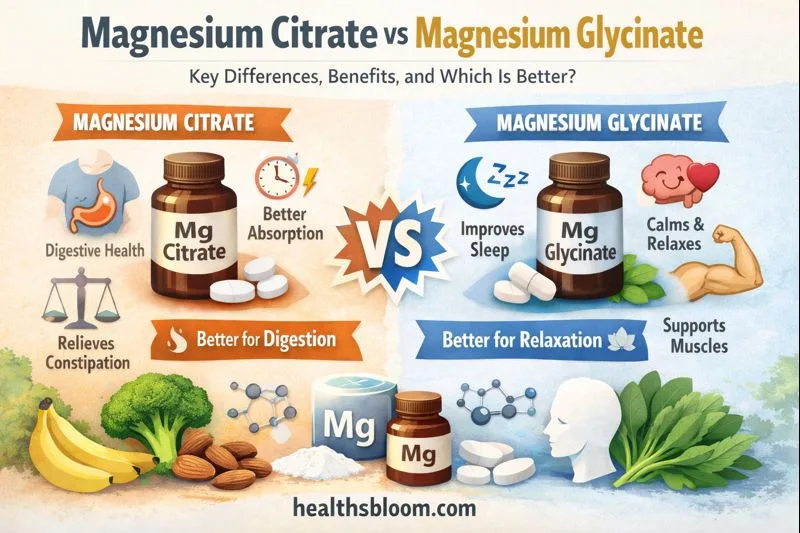
When muscles move, they need magnesium, a task tucked among its several duties, not limited to nerves alone. One option, magnesium citrate, often aids digestion, while another, glycinate, is known for its calming influence. Their paths into the bloodstream differ greatly, depending on how they’re built at a molecular level. Magnesium citrate vs glycinate, what matters most is how the body needs support, nothing more.
How Magnesium Citrate vs Glycinate Works
Not every type of magnesium stands alone; some come with added substances to last longer on the shelf while also slipping into the system faster.
Magnesium citrate is formed when magnesium is bound with citric acid, making it a highly soluble and fast-acting form of the mineral.
Often featured in short-term gut support plans, its primary function is to move things through the intestines. Sometimes used when digestion drags, it works quietly behind the scenes.
Here’s something not many know: magnesium glycinate links magnesium to glycine, an amino acid by nature. Not harsh at all, this version often works well when someone wants balanced mineral intake without stomach trouble.
How do Magnesium Citrate vs Glycinate Function Inside the Body?
Bone strength, nerves, muscles, and fuel for daily activity, magnesium touches each of these. Absorption shifts depending on whether it’s paired with citrate or glycinate.
Water quickly breaks down magnesium citrate, pulling liquid into the gut. Because of that flow, digestion moves faster for many. Yet too much movement leads to runny waste now and then.
When magnesium pairs with glycine, it slips into the body using channels meant for proteins. Glycine can reduce tension, and as such, this one is unlikely to cause an unsettled stomach.
When magnesium pairs with amino acids, something different occurs. Wrapped tightly, the mineral moves easily through your gut. Because it looks like food your body knows, the passage feels natural. Instead of forcing its way in, it slips through quietly. Not every form works this way; most sit heavily, acting like rough minerals. This one? It behaves more like dinner.
Comparing Magnesium Citrate vs Glycinate
One gives magnesium, yet fits a separate role from the other.
Magnesium Citrate
- Higher likelihood of stimulating bowel movements
- Faster acting in the digestive tract
- Most often seen over brief periods
- Some people notice looser stools when taking larger amounts
Magnesium Glycinate
- Soothing for digestion, while easing through the gut. Soft movement inside, without rough edges along the way.
- Calm travels deep, staying mild from start to finish
- The possibility of digestive upset drops noticeably
- Perfect for everyday routines, built to last over time
- Picked now and then when nights feel too long. Sometimes helps when the mind won’t slow down
What works best changes from person to person; no single choice wins for everyone. Fitting takes preference over personal fitting rather than rules.
Health Benefits
When looking at Magnesium citrate vs glycinate, both types work well for daily intake. Still, each covers basic magnesium requirements effectively but through different paths.
Magnesium Citrate Benefits
Might be worth trying magnesium citrate
- Relieve occasional constipation
- Support regular bowel movements
- Since citrate pulls water into the gut, it is best used when you feel backed up and need relief.
Magnesium Glycinate Benefits
Magnesium glycinate may help:
- Support muscle relaxation
- Promote calm nervous system function
- Cramping might ease when magnesium levels rise. Body function often improves with enough of this mineral. Muscle issues sometimes fade as supply increases. Proper intake can make a difference over time
- Calmness at bedtime ties to glycine’s quiet influence
People often pick this version when their stomach needs to stay calm.
Who Benefits Most?
Some might lean toward one type depending on how their body responds. The Magnesium citrate vs glycinate effects on digestion mean that individuals tend to use the citrate version in the short term, rather than every day.
Magnesium citrate may be suitable for:
- People with occasional constipation
- Those who need a fast-acting magnesium source
- People who need help with digestion might try it for a short time
Magnesium glycinate may be more appropriate for:
- People with sensitive stomachs who need to maintain their magnesium levels daily without digestive upset.
- Persons interested in stress, muscular tension, or sleep.
What one person requires might differ greatly from what another. A tailored reaction often plays a key role.
Safety Risks and Considerations
Magnesium supplements do not pose any problems to most individuals, provided there is a reasonable amount of the drug used. Still, zero risks? Not quite. High doses of magnesium citrate can lead to:
- Diarrhea
- Abdominal cramping
- Too much use might disrupt your body’s mineral balance
Might handle magnesium glycinate more easily, though too much could lead to discomfort. Digestive issues sometimes appear when amounts go beyond normal limits.
Taking too much may also cause:
- Nausea
- Low blood pressure
- Timing matters when mixing medicines. Taking one too soon after another, magnesium could block an antibiotic’s effect. Blood pressure pills may not work right either. Space each dose apart by several hours to stay safe
When kidneys are damaged, handling magnesium gets tricky. A body usually clears excess through healthy filters, yet slow ones let it pile up. Danger hides in that buildup. Speaking with a healthcare provider makes sense before making choices. Warnings matter most when the function dips. Medical treatment and proper food come first; pills won’t fix what they weren’t made for.
Getting Started with Simple Steps
Starting with magnesium supplements? Take it step by step at first. That way, you notice what happens inside your body. Picking the right kind matters because absorption differs between forms. Look closely at the packaging; hidden extras sometimes show up there. Look at the label for elemental magnesium.
Up front, a container may claim 500mg, yet inside, just 100mg could be usable by your system. That gap exists because magnesium relies on a helper, like citrate or glycinate, to stay stable inside the tablet. A large portion of the weight comes from the compound attached to the mineral, rather than the mineral alone. Look at the label’s fine print to see how much pure magnesium each dose delivers. Spotting this number means you won’t fall short or go overboard without realizing it.
- Pick what fits best, focus on digestion, or just a light everyday boost
- It is better to start with a lower amount so that you can determine how your body responds.
- During meals works best for magnesium, but timing matters too. Early hours work well for magnesium citrate, which keeps things moving smoothly through the day. Come nighttime, switch it out with magnesium glycinate; that one eases the mind when darkness settles in.
- Starting off, mixing different magnesium products might not be safe unless someone tells you it is okay. Getting advice first helps prevent problems down the line
- Magnesium is also abundant in food. Sources include leafy greens such as spinach, grains such as oats and brown rice, and seeds such as pumpkin or sunflower.
A few cashews or almonds can make a difference instead of just depending on supplements, and help you fill the gaps naturally. Not always obvious, yet magnesium hides where curiosity doesn’t look first.
Fresh meals come first, pills step in just if gaps show up. Which one should you choose? If you’re looking to support staying regular or have a slow gut, citrate is the standard choice. If you want to sleep better, relax, or have a sensitive stomach, glycinate is usually the better path.
Conclusion
In the debate of Magnesium citrate vs glycinate, the form that aids digestion does its job up front. The second kind takes longer, yet it won’t disturb your gut along the way. Same nutrients inside, but each acts differently once taken. One option may feel right for you, while another sits poorly; how it feels is part of what counts. Watching how your system reacts keeps things under control, period.
Frequently Ask Questions
Could magnesium citrate and glycinate be combined?
True. Many people use the two together in case they need assistance in digesting their food or relaxing. Start with a single one, pay attention to the response of your body. Limit the daily use of elemental magnesium; the majority of adults ought to remain within 310 and 420 milligrams. That much works.
How soon would magnesium glycinate begin to work?
Digestion may become easier some hours after the intake of citrate. It takes most individuals one or two weeks of daily usage of glycinate before they feel like they sleep better or have a less tense body.
Disclaimer: This Healthsbloom’s content is for educational purposes only and is not medical advice. Consult your doctor to determine which magnesium supplement best suits your needs.
